

BLOG
Stretch vs. Protection: Can FR Base Layers Deliver Both?
[ 21.07.2026]
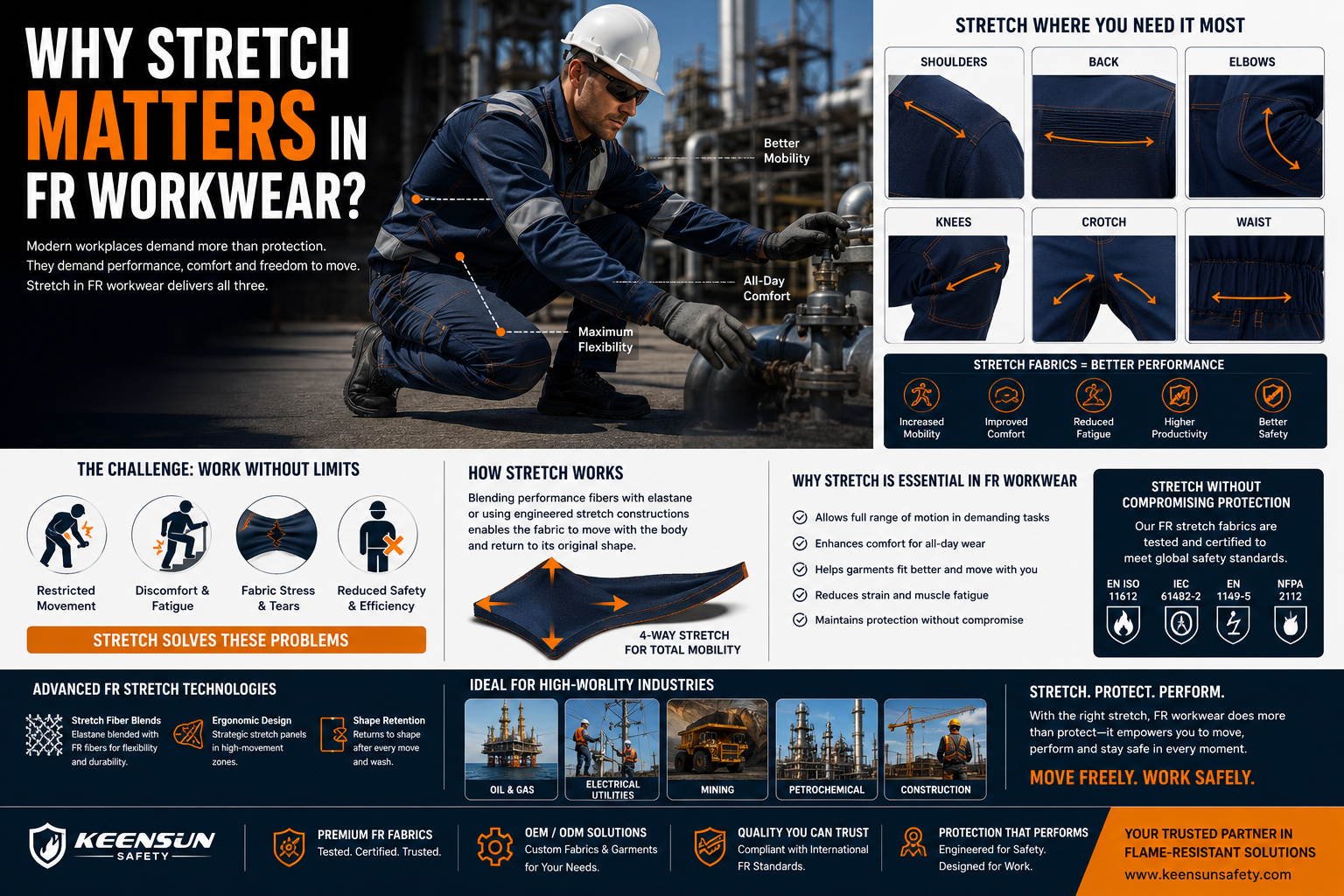 Why Stretch Matters in FR Base Layers: Can FR Garments Be Comfortable and Protective?
For many workers in the oil & gas, utilities, and electrical industries, FR base layers are worn for long hours under demanding conditions. While flame resistance and arc flash protection remain essential, comfort has become an increasingly important factor in garment selection.
One of the key elements that improve comfort is stretch.
Traditional FR base layers often rely on rigid fabric constructions that provide protection but may restrict movement. Modern FR knitwear, however, can incorporate controlled stretch properties to enhance flexibility, fit, and wearer comfort without compromising safety performance.
The challenge lies in balancing stretch with flame-resistant protection. Conventional elastane fibers are not inherently flame resistant and may melt when exposed to heat. For this reason, FR garment developers must carefully control the amount of elastane used in the fabric and validate the final garment through certified testing.
A well-designed FR base layer can achieve:
• Improved freedom of movement
• Better garment recovery after repeated wear
• Enhanced comfort during long shifts
• Reduced fabric bagging at elbows and knees
• Compliance with key standards such as EN ISO 11612 and IEC 61482-2
At Keensun, we continuously explore innovative fiber blends that combine comfort, durability, and certified protection. By optimizing the balance between FR fibers and stretch components, modern FR base layers can deliver both safety and superior wearer experience.
Because protection should never come at the expense of comfort.
[Back]