

BLOG
Modacrylic vs Merino Wool for FR Underwear: Which Material Performs Better?
[ 25.07.2026]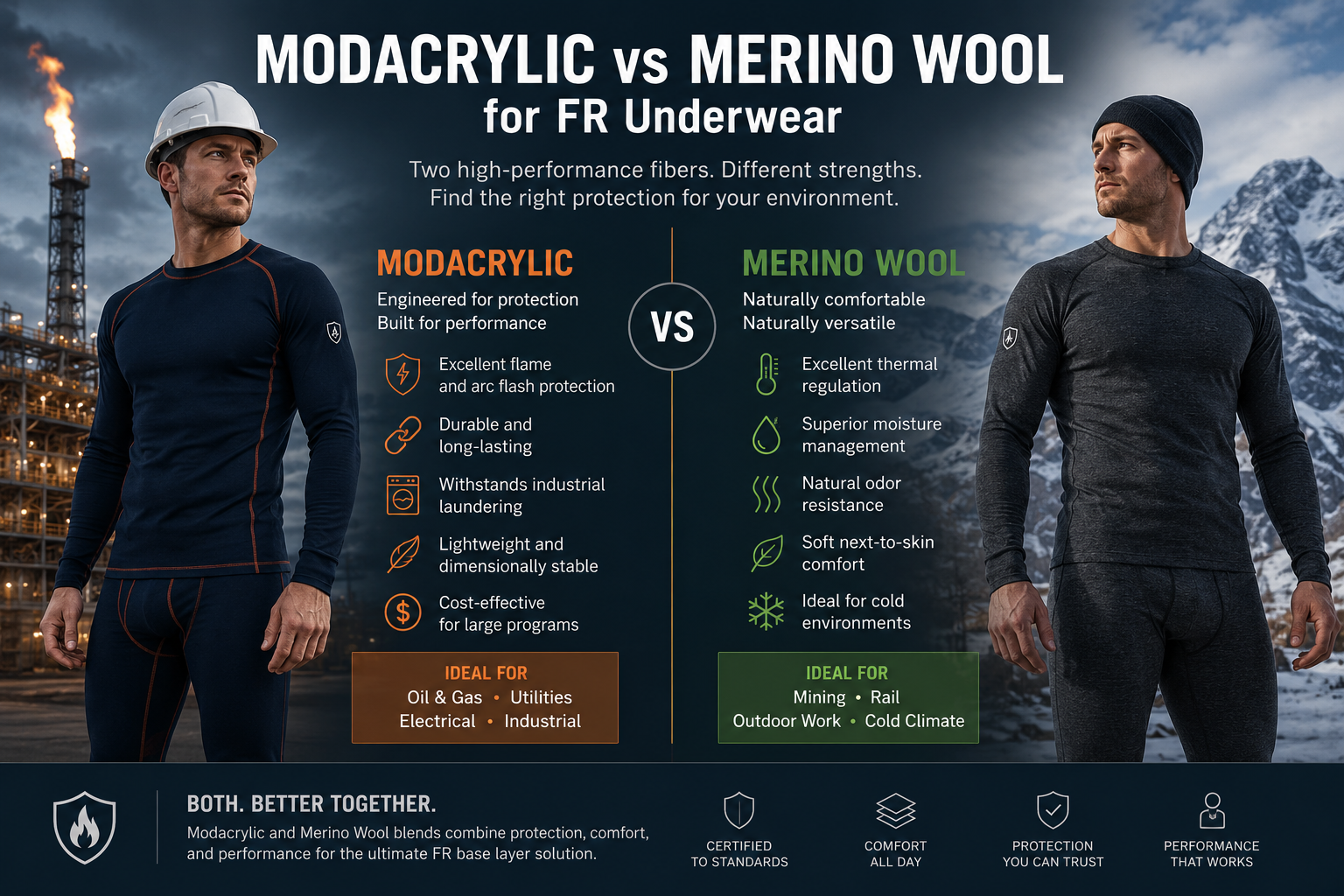
Flame-resistant (FR) base layers play a critical role in protecting workers in industries such as oil & gas, utilities, mining, and rail transportation. While FR garments are often evaluated by their certifications and compliance standards, the choice of fiber can significantly impact comfort, durability, and overall performance.
Among the most common materials used in FR underwear and base layers are Modacrylic and Merino Wool. Both offer unique advantages, but they are designed to meet different workplace demands.
What Is Modacrylic?
Modacrylic is an inherently flame-resistant synthetic fiber. Unlike chemically treated fabrics, its flame-resistant properties are built into the fiber structure and do not wash out over time.
Key Benefits of Modacrylic
-
Permanent flame resistance
-
Excellent arc flash protection
-
Lightweight and durable
-
Good dimensional stability
-
Consistent performance throughout garment life
-
Suitable for industrial laundering
Modacrylic blends are widely used in FR base layers designed for industrial workers who require reliable protection and long service life.
What Is Merino Wool?
Merino Wool is a natural fiber sourced from Merino sheep. It has become increasingly popular in technical apparel due to its comfort and temperature-regulating properties.
Key Benefits of Merino Wool
-
Naturally flame resistant
-
Excellent thermal regulation
-
Superior moisture absorption
-
Soft next-to-skin comfort
-
Natural odor resistance
-
Performs well in cold environments
Merino Wool is often preferred for workers exposed to varying temperatures or extended outdoor activities.
Performance Comparison
| Feature | Modacrylic | Merino Wool |
|---|---|---|
| Flame Resistance | Excellent | Good |
| Arc Flash Protection | Excellent | Moderate |
| Durability | Excellent | Moderate |
| Moisture Management | Good | Excellent |
| Thermal Regulation | Good | Excellent |
| Odor Control | Moderate | Excellent |
| Industrial Laundering | Excellent | Limited |
| Weight Efficiency | Excellent | Good |
| Cost Stability | Excellent | Variable |
Which Material Is Better for Industrial FR Underwear?
The answer depends on the working environment.
Choose Modacrylic When:
-
Workers are exposed to arc flash hazards.
-
Garments require frequent industrial washing.
-
Durability and long service life are priorities.
-
Cost-effective large-scale PPE programs are required.
Typical applications include:
-
Oil & Gas
-
Utilities
-
Electrical Maintenance
-
Industrial Manufacturing
Choose Merino Wool When:
-
Workers operate in cold climates.
-
Comfort and temperature regulation are critical.
-
Extended wear periods are expected.
-
Odor management is important.
Typical applications include:
-
Mining
-
Rail Infrastructure
-
Outdoor Utility Work
-
Winter Operations
Can Modacrylic and Merino Wool Be Blended?
Yes. Many advanced FR base layer systems combine Modacrylic with Merino Wool to balance protection and comfort.
These blends can provide:
-
Permanent flame resistance
-
Improved moisture management
-
Enhanced thermal insulation
-
Better next-to-skin comfort
As a result, blended constructions are becoming increasingly popular among premium PPE brands.
Final Thoughts
Both Modacrylic and Merino Wool have proven their value in FR underwear and protective base layers. Modacrylic offers superior durability and industrial performance, while Merino Wool excels in comfort and thermal regulation.
For most industrial PPE applications, Modacrylic-based FR fabrics remain the preferred choice due to their consistent flame resistance, durability, and compliance with demanding workplace environments. However, Merino Wool or Modacrylic-Merino blends can provide additional comfort benefits where temperature control and extended wear are important considerations.
When selecting FR base layers, the best solution is often determined by the specific hazards, climate conditions, and operational requirements of the end user.
Interested in Our FR Solutions?
[Back]