

BLOG
EN 1149-5 Explained: Why Antistatic Protection Matters in Hazardous Work Environments
[ 25.07.2026]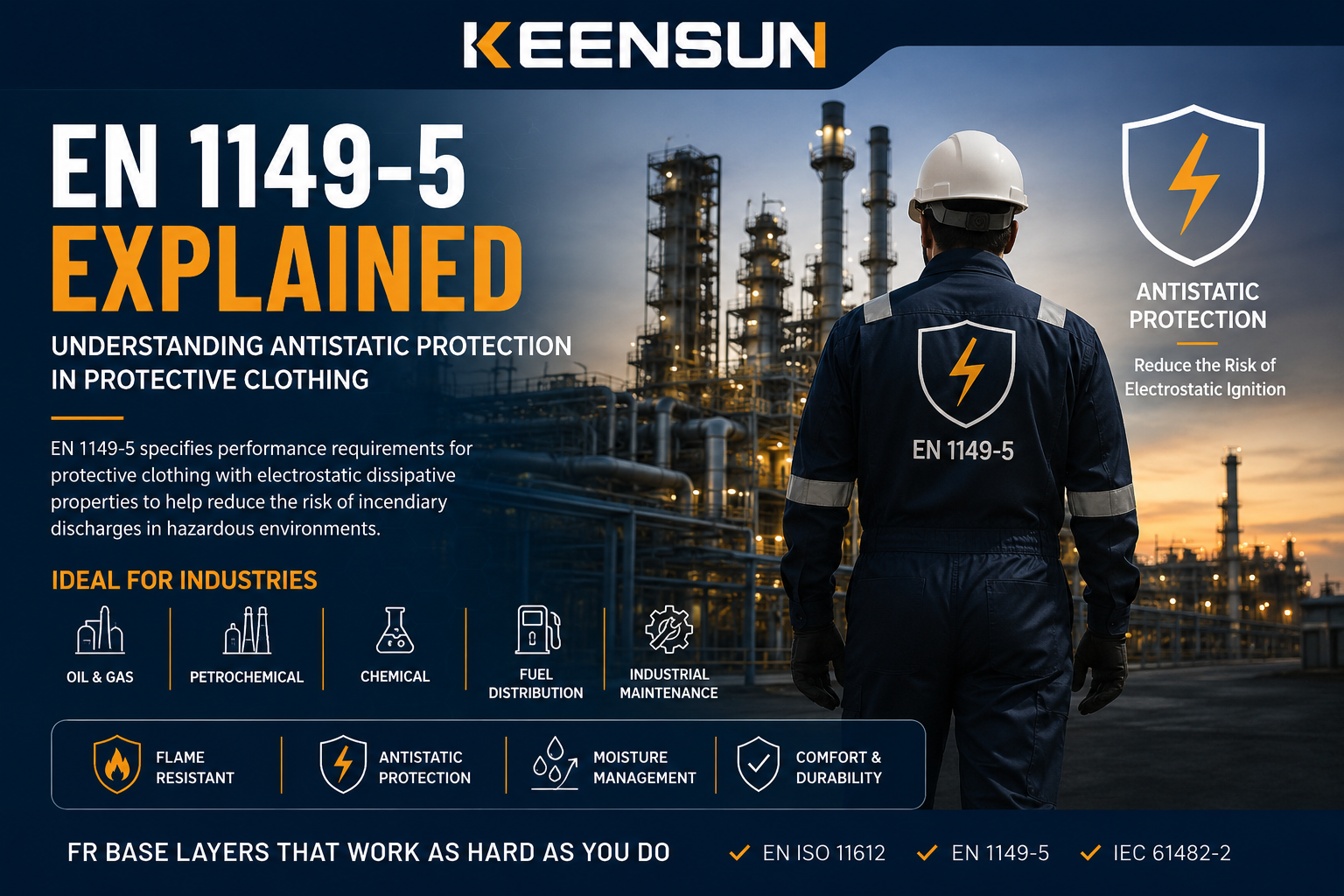
EN 1149-5 Explained: Understanding Antistatic Protection in Protective Clothing
When discussing flame-resistant (FR) clothing, many people focus on heat and flame protection standards such as EN ISO 11612. However, in environments where flammable gases, vapors, or combustible dust may be present, electrostatic discharge can pose an equally serious risk.
This is where EN 1149-5 becomes important.
What Is EN 1149-5?
EN 1149-5 is a European standard that specifies performance requirements for protective clothing with electrostatic dissipative properties.
The purpose of the standard is to reduce the risk of incendiary discharges that could ignite explosive atmospheres.
EN 1149-5 is commonly required in industries such as:
-
Oil & Gas
-
Petrochemical Processing
-
Chemical Manufacturing
-
Fuel Distribution
-
Pharmaceutical Production
-
Industrial Maintenance
Why Is Antistatic Protection Important?
Static electricity is generated naturally through movement and friction.
Examples include:
-
Walking
-
Removing garments
-
Fabric rubbing against the skin
-
Contact between different materials
In normal environments, static discharge is usually harmless.
However, in hazardous workplaces containing:
-
Flammable gases
-
Vapors
-
Solvents
-
Combustible dust
a static spark may become an ignition source.
EN 1149-5 certified clothing helps minimize this risk.
What Does EN 1149-5 Cover?
EN 1149-5 specifies design and performance requirements for electrostatic dissipative garments.
The standard is based on testing methods defined in the EN 1149 series, including:
-
EN 1149-1
-
EN 1149-3
-
EN 1149-5
These tests evaluate the ability of a fabric to dissipate electrostatic charges safely.
Is EN 1149-5 a Flame-Resistant Standard?
No.
EN 1149-5 does not replace flame-resistant standards.
Instead, it is often combined with standards such as:
-
EN ISO 11612
-
IEC 61482-2
For example, many FR base layers used in Oil & Gas environments are certified to both:
EN ISO 11612 + EN 1149-5
This combination provides protection against heat, flame, and electrostatic hazards.
Why Are Antistatic FR Base Layers Important?
Workers often wear multiple layers of clothing beneath their protective garments.
If undergarments are not designed for hazardous environments, they may contribute to static charge accumulation.
FR base layers with antistatic properties help support the overall PPE system by:
-
Improving wearer comfort
-
Managing moisture
-
Reducing static build-up
-
Supporting compliance requirements
Typical products include:
-
FR Base Layer Tops
-
FR Bottoms
-
Balaclavas
-
Socks
Choosing EN 1149-5 Certified Base Layers
When selecting protective base layers, consider:
-
Workplace hazards
-
Certification requirements
-
Fabric composition
-
Comfort during extended wear
-
Compatibility with outer PPE garments
Modacrylic-based FR fabrics containing antistatic fibers are commonly used to achieve compliance with EN 1149-5.
Final Thoughts
EN 1149-5 plays a critical role in protecting workers operating in potentially explosive environments.
While flame resistance helps protect against heat and fire hazards, antistatic protection helps reduce the risk of ignition caused by electrostatic discharge.
For industries such as Oil & Gas, Petrochemical Processing, and Chemical Manufacturing, EN 1149-5 certified FR base layers can form an essential part of a complete protective clothing system.
[Back]