

BLOG
FR Fabric Selection Guide: How to Choose the Right Flame-Resistant Fabric for Base Layers
[ 25.07.2026]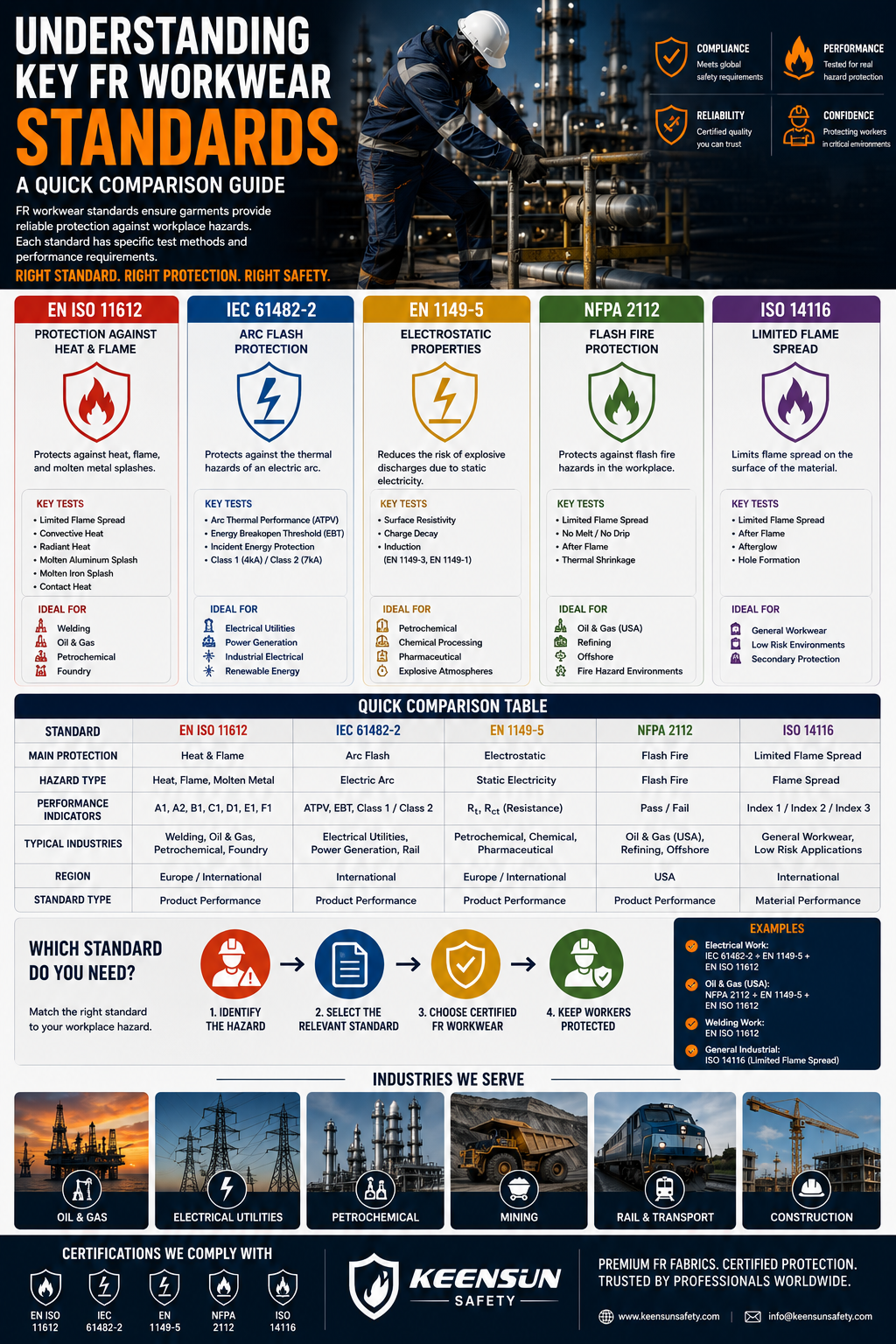
FR Fabric Selection Guide: How to Choose the Right Flame-Resistant Fabric for Base Layers
Selecting the right flame-resistant (FR) fabric is one of the most important decisions when developing protective base layers for industrial workers.
Different industries, climates, and workplace hazards require different performance characteristics. While all certified FR fabrics are designed to provide protection against heat and flame hazards, not all FR fabrics perform the same in terms of comfort, durability, moisture management, and thermal regulation.
This guide explains the key factors to consider when selecting FR fabrics for protective base layers.
Why Fabric Selection Matters
FR base layers are worn directly against the skin and serve as the foundation of a worker's protective clothing system.
The right fabric can help:
-
Improve wearer comfort
-
Enhance moisture management
-
Support thermal regulation
-
Increase garment durability
-
Improve compliance with PPE requirements
Choosing the wrong fabric may result in discomfort, reduced productivity, and lower wearer acceptance.
Common FR Fibers Used in Base Layers
Modacrylic
Modacrylic is one of the most widely used fibers in FR base layers.
Key advantages:
✔ Inherent flame resistance
✔ Excellent durability
✔ Arc flash protection
✔ Good moisture management
✔ Suitable for industrial laundering
Typical applications:
-
Oil & Gas
-
Utilities
-
Industrial Maintenance
Merino Wool
Merino Wool is a natural fiber known for its comfort and thermal regulation.
Key advantages:
✔ Excellent temperature regulation
✔ Natural odor resistance
✔ Superior moisture absorption
✔ Soft next-to-skin comfort
Typical applications:
-
Mining
-
Outdoor Utility Work
-
Cold Climate Operations
Antistatic Fibers
Conductive fibers are commonly added to FR fabrics to achieve compliance with EN 1149-5 requirements.
Benefits include:
✔ Reduced static build-up
✔ Improved safety in hazardous environments
✔ Compatibility with Oil & Gas and Petrochemical applications
Key Factors When Selecting FR Fabrics
1. Workplace Hazards
The first consideration should always be the workplace environment.
Examples:
-
Heat and flame exposure
-
Arc flash hazards
-
Electrostatic risks
-
Cold weather conditions
Certification requirements often determine the appropriate fabric construction.
2. Climate Conditions
Workers in hot climates require:
-
Lightweight fabrics
-
Moisture management
-
Breathability
Workers in cold climates may require:
-
Higher fabric weights
-
Thermal insulation
-
Layering systems
3. Comfort and Wearability
Workers are more likely to wear PPE correctly when garments are comfortable.
Important factors include:
-
Softness
-
Stretch
-
Breathability
-
Moisture control
Comfort directly influences compliance.
4. Durability
Industrial garments are often subjected to:
-
Frequent washing
-
Long working hours
-
Abrasion
Durable fabrics help reduce replacement costs and extend garment life.
5. Certification Requirements
Typical standards for FR base layers include:
-
EN ISO 11612
-
EN 1149-5
-
IEC 61482-2
Fabric selection should support the required certifications for the target application.
Recommended Fabric Solutions by Industry
Oil & Gas
Recommended:
-
Modacrylic Blends
-
Antistatic Fibers
Focus:
-
Flame resistance
-
Antistatic protection
-
Durability
Utilities
Recommended:
-
Modacrylic Blends
-
Arc-rated constructions
Focus:
-
Arc flash protection
-
Moisture management
Mining
Recommended:
-
Merino Wool FR Blends
-
Thermal FR Fabrics
Focus:
-
Warmth
-
Comfort
-
Moisture control
Industrial Maintenance
Recommended:
-
Lightweight Modacrylic Blends
Focus:
-
Comfort
-
Durability
-
Daily wear performance
Final Thoughts
There is no single FR fabric that is ideal for every application.
The best solution depends on workplace hazards, climate conditions, certification requirements, and wearer comfort expectations.
By understanding the strengths of different FR fibers and fabric constructions, PPE brands and buyers can make informed decisions and develop FR base layers that provide both protection and long-term wearer acceptance.
[Back]