

BLOG
Why Fabric Construction Matters in Seamless Protective Knitwear
[ 19.10.2026]
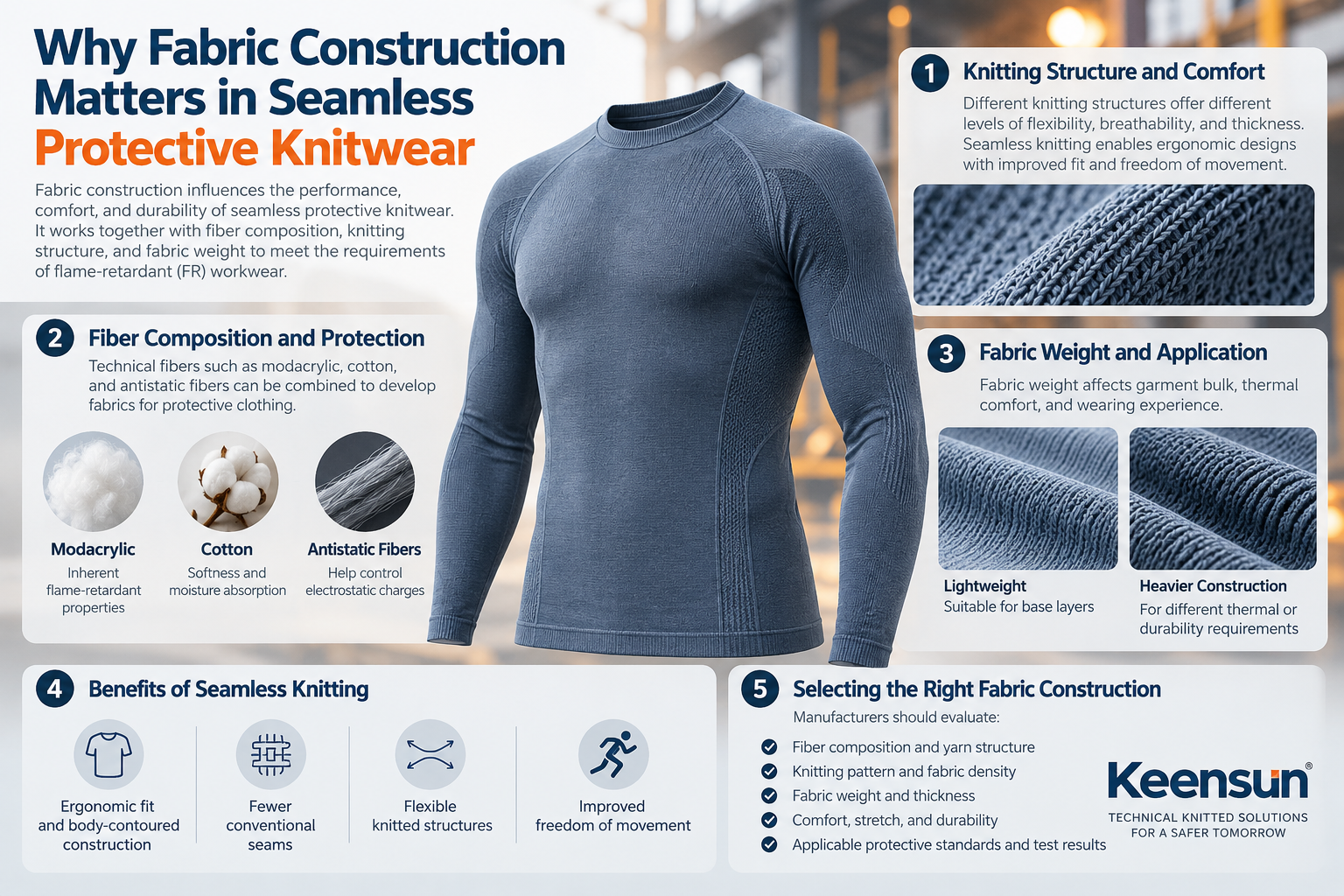 Why Fabric Construction Matters in Seamless Protective Knitwear
Fabric construction plays an important role in the performance, comfort, and durability of seamless protective knitwear. In flame-retardant (FR) workwear, choosing the right fiber blend is only one part of the development process. Knitting structure, fabric weight, and yarn selection also influence the final garment.
1. Knitting Structure and Comfort
Different knitting structures offer different levels of flexibility, breathability, and fabric thickness. Seamless knitting allows manufacturers to engineer garment structures for improved fit and freedom of movement.
2. Fiber Composition and Protection
Technical fibers such as modacrylic, cotton, and antistatic fibers can be combined to develop fabrics for protective clothing.
For example, a blend of 60% Modacrylic, 39% Cotton, and 1% Antistatic Fiber can be considered for seamless FR knitwear. However, the finished fabric must be tested to verify its protective performance.
3. Fabric Weight and Application
Fabric weight affects garment bulk, thermal comfort, and wearing experience. Lightweight fabrics may be suitable for base layers, while heavier constructions may be considered for different thermal or durability requirements.
The appropriate weight depends on the intended application and required protection.
4. Why Seamless Knitting Matters
Seamless knitting technology offers flexibility in garment design, including:
- Ergonomic fit and body-contoured construction
- Fewer conventional seams
- Flexible knitted structures
- Improved freedom of movement
These features can enhance wearing comfort, particularly for workers who wear protective clothing for extended periods.
5. Selecting the Right Fabric Construction
When developing seamless protective knitwear, manufacturers should evaluate:
- Fiber composition and yarn structure
- Knitting pattern and fabric density
- Fabric weight and thickness
- Comfort, stretch, and durability
- Applicable protective standards and test results
The final construction must be appropriate for the garment’s intended use. Seamless construction alone does not guarantee compliance with protective clothing standards.
Conclusion
Fabric construction is essential to developing effective seamless protective knitwear. By combining suitable fibers with carefully engineered knitting structures, manufacturers can develop garments that balance comfort, fit, and the required protective performance.
Keensun specializes in technical knitted solutions for industrial and protective clothing. Contact us to discuss your seamless FR knitwear development requirements.
[Back]