

BLOG
How Modacrylic, Cotton and Antistatic Fibers Work Together
[ 20.10.2026]
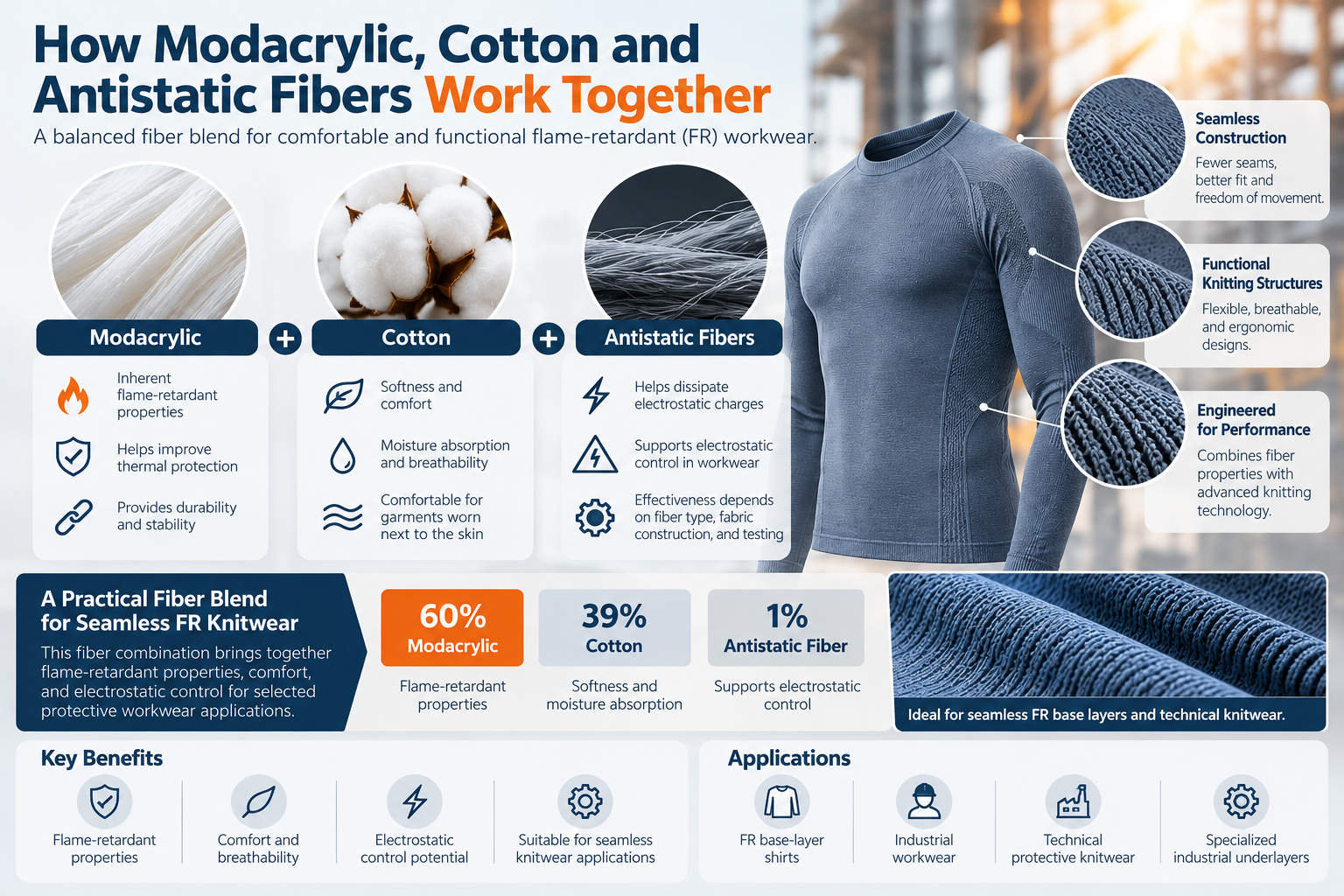 How Modacrylic, Cotton and Antistatic Fibers Work Together
Choosing the right fiber blend is essential for developing comfortable and functional flame-retardant (FR) workwear. Modacrylic, cotton, and antistatic fibers each contribute different properties to technical protective knitwear.
1. Modacrylic: Flame-Retardant Properties
Modacrylic is widely used in FR clothing because of its inherent flame-retardant properties. It is an important fiber for developing protective fabrics for industrial applications.
2. Cotton: Comfort and Moisture Absorption
Cotton provides softness and moisture absorption, helping improve comfort in garments worn next to the skin. Blending cotton with modacrylic can create fabrics suitable for FR base layers and protective knitwear.
3. Antistatic Fibers: Electrostatic Control
Antistatic fibers help dissipate electrostatic charges when properly incorporated into a fabric. Their effectiveness depends on the fiber type, fabric construction, and test results.
4. A Practical Fiber Blend for Seamless FR Knitwear
One possible composition for seamless FR base layers is:
- 60% Modacrylic — inherent flame-retardant properties
- 39% Cotton — softness and moisture absorption
- 1% Antistatic Fiber — supports electrostatic control when appropriately engineered
This blend combines different fiber properties to meet the development needs of selected protective knitwear applications.
The final fabric must be evaluated and tested for its intended use. Fiber percentages alone do not guarantee compliance with protective clothing standards.
5. Why Fiber Selection Matters
The performance of seamless FR workwear depends on more than fiber composition. Yarn structure, knitting technology, fabric weight, and garment design also influence comfort and protective performance.
Depending on the intended application, relevant standards may include EN ISO 11612 for protection against heat and flame and EN 1149-5 for the electrostatic properties of protective clothing.
Conclusion
Combining modacrylic, cotton, and antistatic fibers offers a useful approach to developing technical FR knitwear that balances flame-retardant properties, comfort, and electrostatic performance requirements.
Keensun develops seamless knitted solutions for industrial and protective clothing applications. Contact us to discuss your FR fabric composition and product development needs.
[Back]