

BLOG
Choosing the Right Modacrylic Blend for Protective Clothing
[ 20.10.2026]
Choosing the Right Modacrylic Blend for Protective Clothing
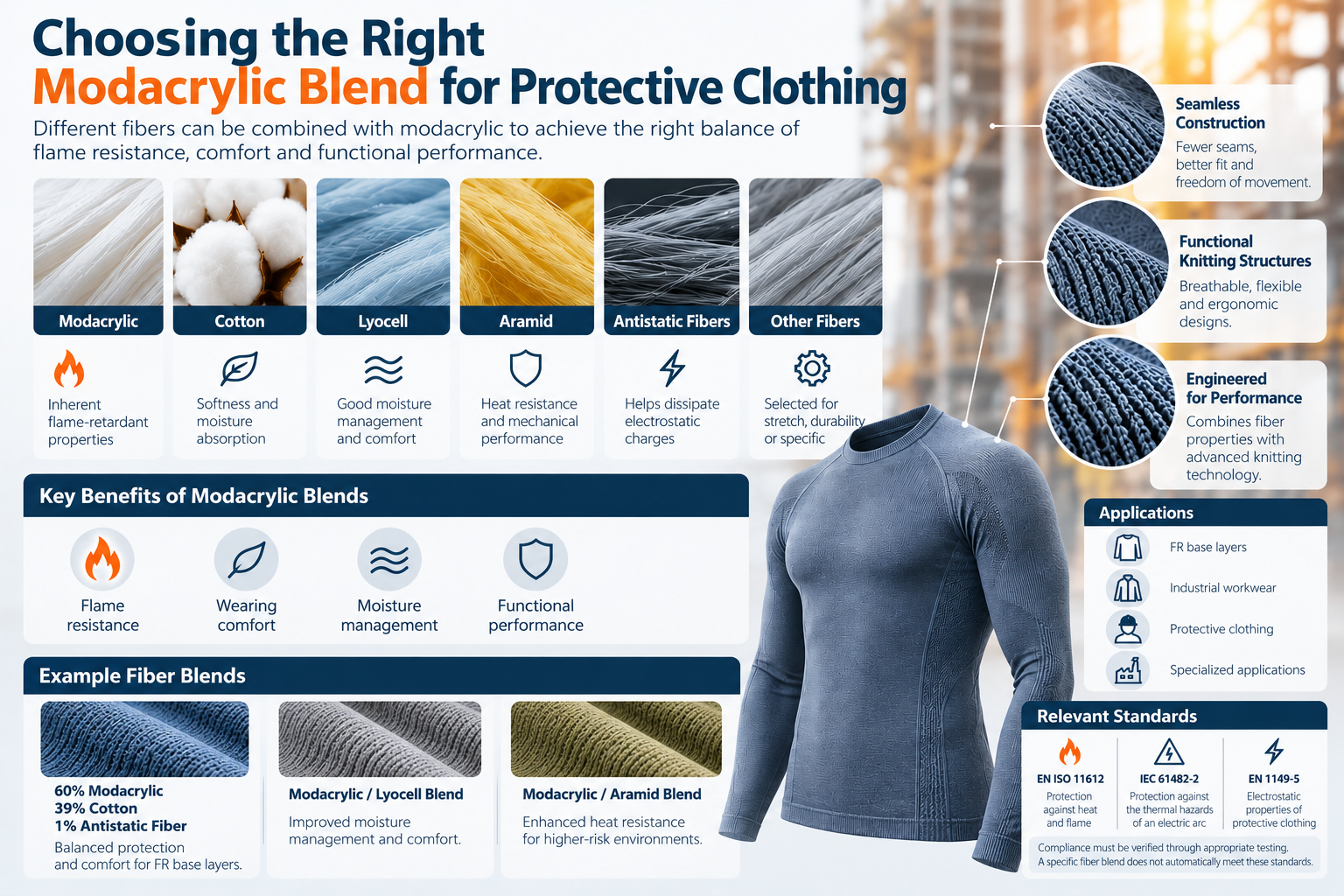
Choosing the right fiber blend is essential when developing flame-retardant (FR) protective clothing. Different fibers contribute different properties, allowing manufacturers to develop fabrics for specific protection, comfort, and performance requirements.
1. Common Fibers Used in Modacrylic Blends
Modacrylic can be combined with various fibers depending on the intended application.
- Cotton: Provides softness and moisture absorption.
- Lyocell: Can improve moisture management and wearer comfort.
- Aramid: Offers heat resistance and can contribute to mechanical performance, depending on the fiber type.
- Antistatic Fibers: Help dissipate electrostatic charges when properly incorporated into the fabric.
- Other Functional Fibers: May be selected to achieve specific requirements for stretch, durability, or moisture management.
The best combination depends on the intended working environment and the performance requirements of the finished garment.
2. Why Fiber Blending Matters
Each fiber has different characteristics. By combining Modacrylic with other suitable fibers, manufacturers can balance flame resistance, comfort, durability, and functional performance.
However, the final properties depend not only on fiber composition but also on yarn structure, fabric weight, knitting construction, and finishing processes.
3. Consider Fabric Construction
For seamless FR base layers, knitting technology plays an important role in garment performance.
Seamless knitting can reduce seam bulk and support a close, comfortable fit. Different knitting structures can also influence stretch, breathability, and moisture management.
When sourcing protective knitwear, buyers should evaluate both the fiber blend and the fabric construction.
4. Verify Applicable Standards
Depending on the intended application, relevant standards may include:
- EN ISO 11612: Protective clothing against heat and flame.
- IEC 61482-2: Protective clothing against the thermal hazards of an electric arc.
- EN 1149-5: Electrostatic properties of protective clothing.
Fiber composition alone does not guarantee compliance. Buyers should request appropriate test reports and confirm that the tested fabric or garment meets the requirements of its intended use.
5. Choose the Right Blend for Your Application
There is no single Modacrylic blend suitable for every protective clothing application. The right choice depends on the required protection, comfort expectations, working conditions, and garment design.
At Keensun, we develop technical knitted fabrics and seamless base layers using different fiber combinations and fabric constructions to meet specific project requirements.
Looking for a suitable Modacrylic blend for your next PPE project?
Visit www.keensunsafety.com or contact info@keensunsafety.com to discuss your requirements.
Keensun — Technical Knitted Solutions for Protective Clothing.
[Back]